
Why are people so shit? Part 2.
Why are people so shit? Part 2.
(In Part 1, I wrote about a conversation with another parent that cracked something open in me — and the centuries-long history of how care got shrunk, priced, and severed from us. If you haven't read it yet, start there. This picks up right after.)
The cumulative effect brought something much less talked about. A culture that is genuinely confused about care. We sense that we need it desperately. We just can’t quite find our way back to it because we don’t know where or how to find it.
What I notice, in myself and in the people I work with, is that individuals end up carrying the load of what was once a community effort. The depletion isn’t just personal. It’s inherited. Carried in nervous systems that have been trying to do too much, with too little support, for too long.
This isn’t a failure. It’s the predictable result of systems that stripped care of its value and then asked each of us to make up the difference without complaint.
We’ve landed with skills of competing, transaction and extraction. A type of care that touches you (or teases you rather) – but not enough to be deeply felt.
So of course, here we are. Being shit humans. Shit leaders. Doing shitty things to each other.
I’m sensing, not because we want to, but because we don’t know another way. We’re not even being modeled another way.
And yet, beneath all of it care never fully disappeared. It went underground.
It survived in the humans who kept passing knowledge and practices between generations. In the communities that continued to gather, grieve, and celebrate together despite every structural pressure. In the activists, the organisers, the artists, the mutual aid networks, the community elders who refused to let tending become purely transactional. In the circles of people – often the most marginalised – who kept showing up for one another without payment, recognition or anyone calling it important.
Care has always had its keepers. It has never been fully owned, fully institutionalised, fully bought. It has been waiting.
And something is shifting now. There is a growing hunger – not for self-care as a commodity, but for real care as a practice. For tending as a value. For the kind of presence and reciprocity that no market can manufacture.
People are exhausted by the simulation of care and starving for the real thing.
That hunger is not weakness. It is the body wanting a real human need. Care.
The hum of care is still here. It’s time to turn towards it again and bring it back to life. Full bodied. Full sensory. Real care. That makes us feel more real.
This is why we need to have honest conversations with people in our lives around the history of care being devalued over time.
We need to build the skills of care that quietly got lost. Practicing them in small groups and communities who are ready to shift the culture together. And then begin to let care ripple through all the parts of our lives.
Then watch how the tiniest drops of care can transform the most painful moments into something more tolerable and perhaps even more beautiful.
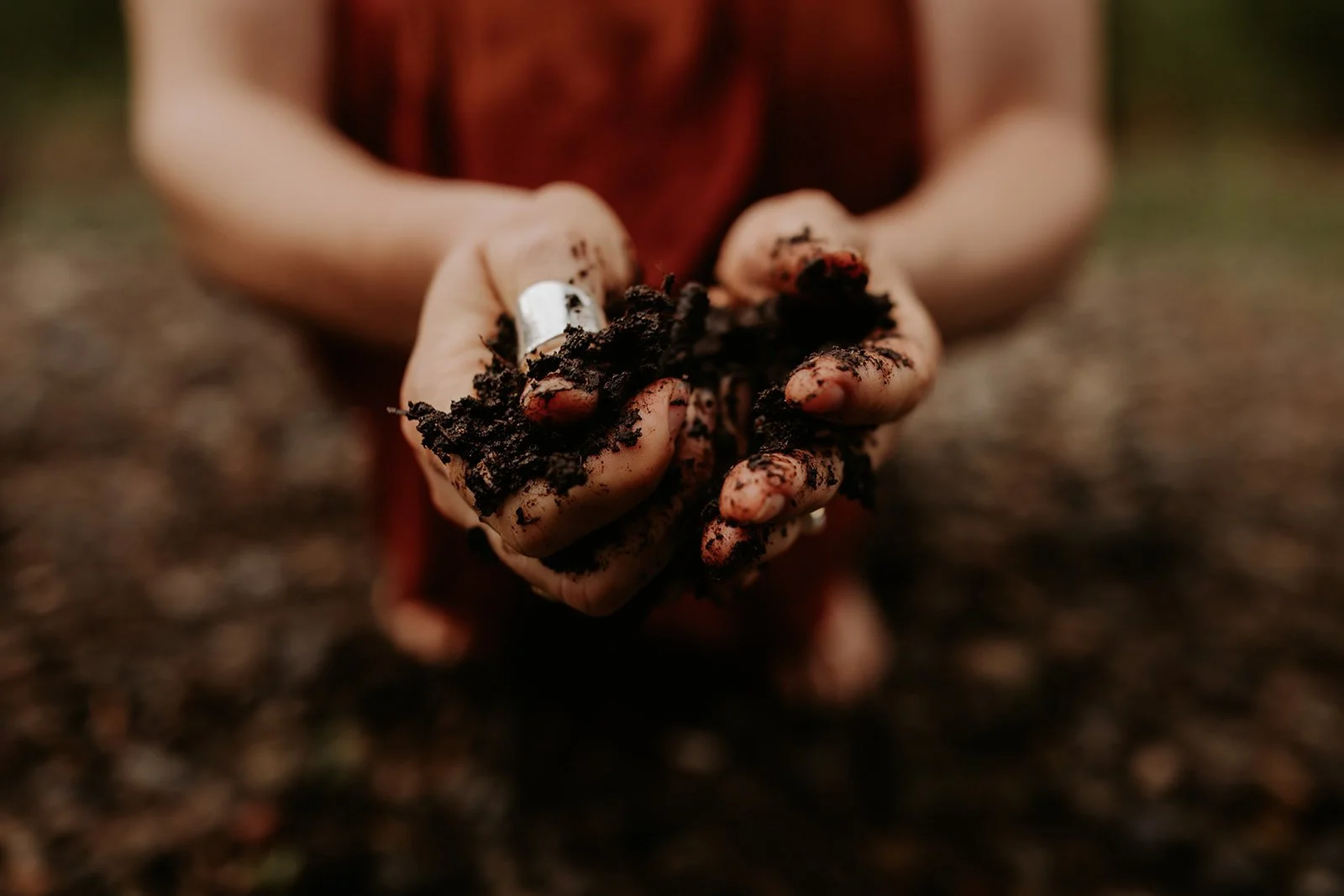
The CareWeaver 3 month online program is my response to this. A place to rebuild and regenerate the skills of care with our own bodies and relationships so we can gradually begin to shift the cultural soil we live in.
If this sparks something for you, come over and join the waitlist.
You might like


There’s a heavy grief that sits at the bottom of many hearts.
Buried deep beneath hands that can’t quite reach for care because they’re not quite sure they deserve it.
Or if they’ll even receive it.
Or worse. They’ll be rejected or wronged.
Because history has told them time and time again the same story.
That care isn’t available.