
ANCHOR – A somatic self care practice for meeting emotional and physical pain differently – $37
When it all feels like too much, you don't need another plan. You need somewhere to anchor.
Build a felt sense of steadiness you can access even when it all feels heavy and overwhelming.

If you're carrying something that won't shift –
Maybe it's physical or emotional pain.
Maybe it's a nervous system that never quite settles – the low hum of anxiety, the exhaustion of always bracing, the sense of never being quite present.
Maybe you've tried the tools. The breathwork, the body scans, the somatic practices on YouTube.
They helped in glimpses.
But when the hard moments come, none of it is quite there.
And when it doesn't work, there's a familiar thought waiting.
It should be working by now…
Why doesn’t this work for me?
Anchor starts somewhere else entirely.




The goal was never to make it go away
Most nervous system approaches – however well intentioned – carry an implicit promise.
Do this correctly and you will regulate.
Follow this framework and you will heal.
But the harder you push against what's hard, the more your body braces.
The strategies that skip past your actual experience just keep you circling the same loop – trying, not quite landing, wondering what you're doing wrong.


Here's what I want you to know:
You haven't been failing. You've been handed tools and science without ground to stand on first. You’ve been handed tools and science that doesn’t always include your lived experience and reality.
Anchor builds the ground so you can understand your body and know what actually steadies you when things get loud.

"Since listening to your recording I've realised the pain and shut-down is my body's response, not a personal failure. I've been moving and swaying as I listen. It brought a lot of validation and compassion."
– Anchor participant
INTRODUCING ANCHOR |
INTRODUCING ANCHOR |
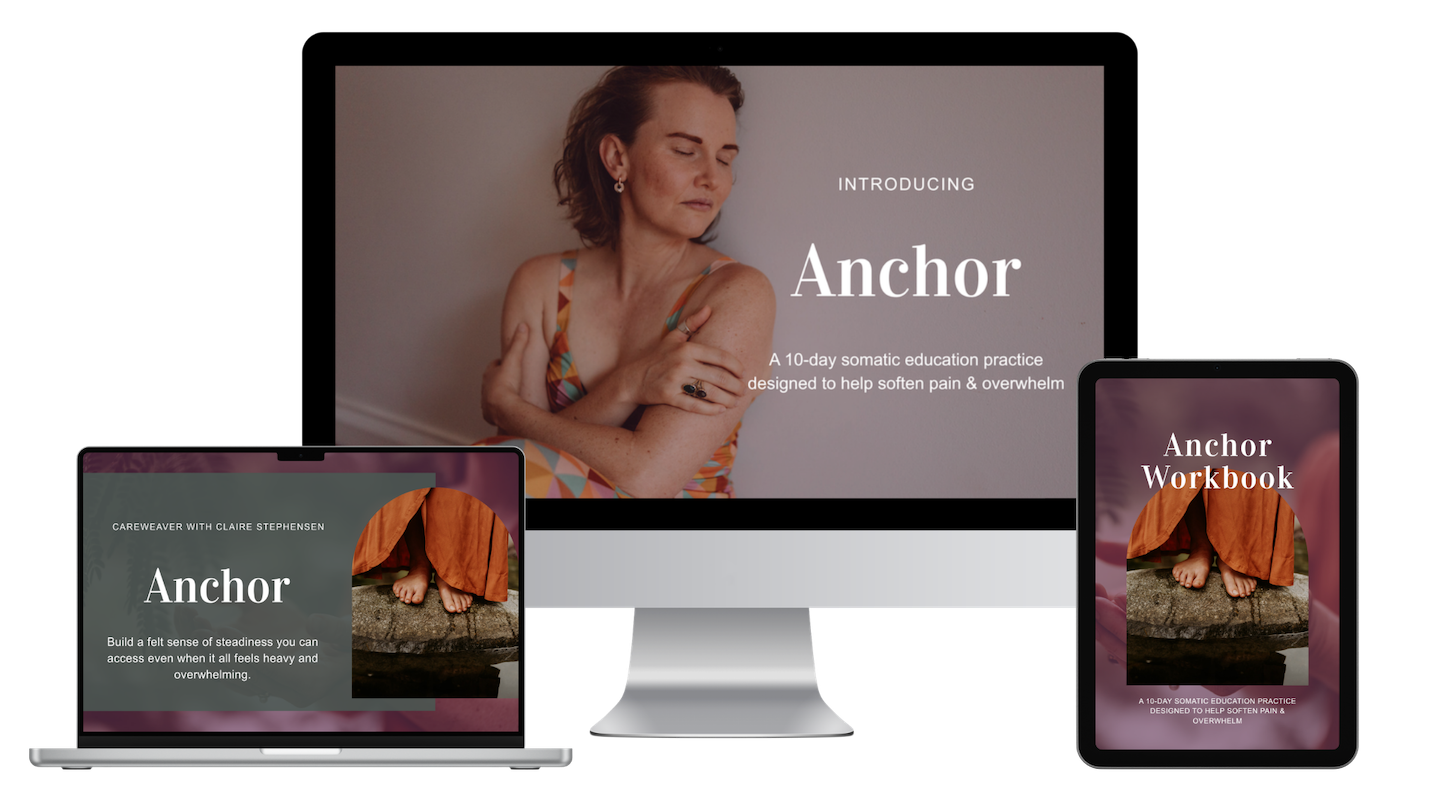
Anchor
with Claire Stephensen
A short somatic course for meeting pain – physical or emotional – with steadiness instead of force. One sense at a time.
I've spent more than 15 years as a music therapist, somatic therapist and neuropsychotherapist – working with people in chronic pain, complex trauma, and the kind of overwhelm that doesn't have a name.
Anchor is the first and most foundational piece of that work, made small enough to start today.
Anchor isn’t so much a course as it is a remembering.
Yes, you'll come to understand why pain and overwhelm take hold the way they do. But more than that, you'll feel it.
You'll build a web of anchors that are yours, and a map of what actually steadies your body when things get loud.
The end result: pain that doesn't run the show quite so much, and a body that starts to feel a little more like somewhere you can live.

HERE’S HOW IT ALL BREAKS DOWN
The CareWeaver Anchor process breaks down the concept of anchoring into micro skills – all while drawing from a model that is built to hold the complexity of living in these times.
01
You orient
Before any practice or technique, we’ll get to know what’s feeling loud for you. How present you feel, how far away you feel and how much capacity you've got to feel what's here right now.
Not to tell you how wrong you are. But to get to know how you’re travelling. With nothing to fix or force.
This is the part most approaches skip, and it's the part everything else rests on.
You learn three small moves: coming towards steadiness and back again, so it's never all or nothing. Holding the hard thing and the anchor at the same time. And leaning in until the anchor can take a little more weight.
Then, day by day, you test which senses actually steady you – touch, sound, sight, movement, the ground beneath you, the natural world, the sacred. Each one becomes another thread.
02
You lay your first anchor, then spiral out through the senses
You feel what's shifted, gather the threads into your own anchor map, and let it settle into a web you can come back to again and again.
By the end you're not holding a list of techniques. You've built ground that stays yours. And you practice the art of tending what you’ve built.
03
You return to centre
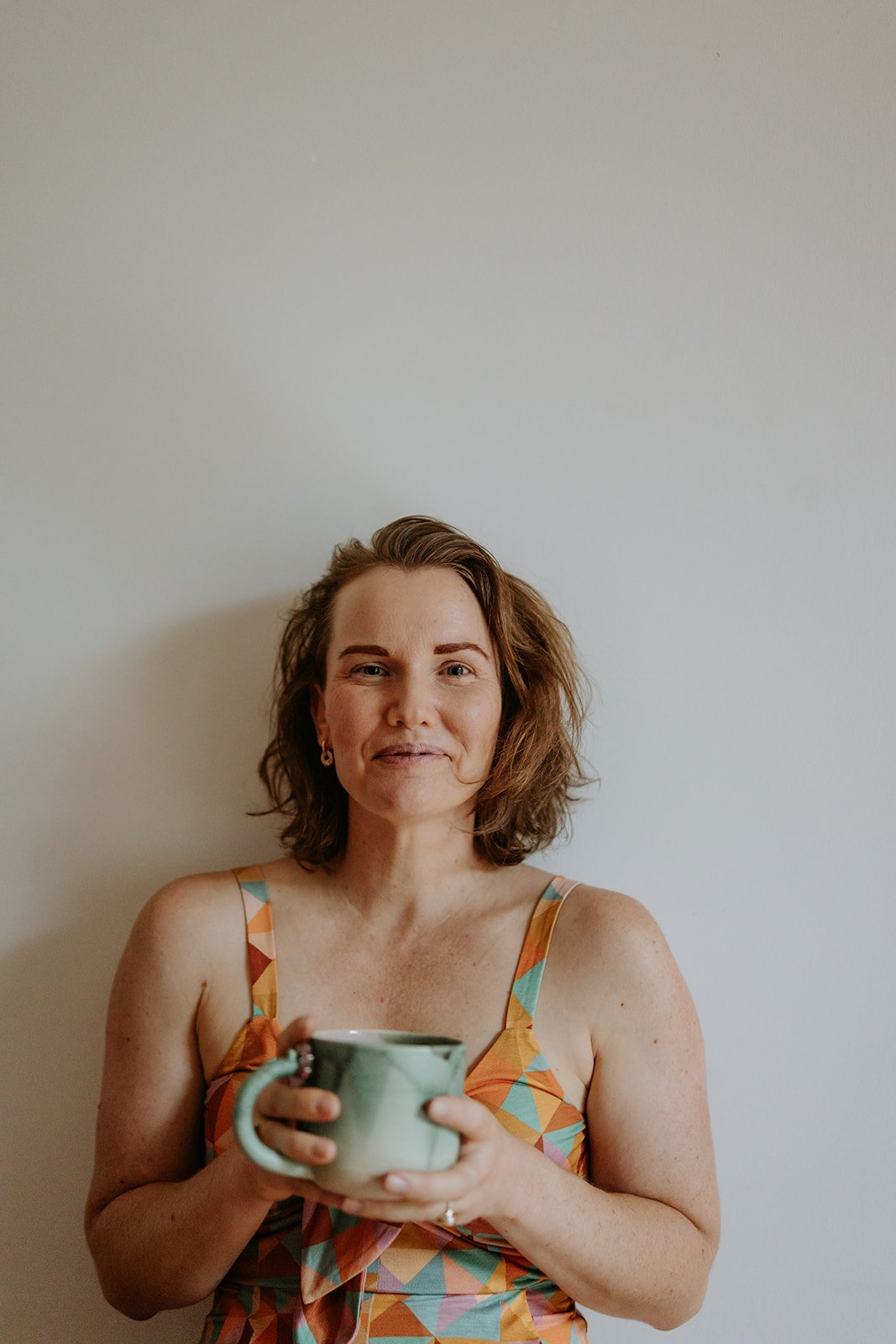

Hey there!
I’m Claire
"Claire has a gift to be able to hold space for others and bring forward what is in our hearts."
– CareWeaver participant
For the past 20 years, I've been exploring what it truly takes to move towards care – especially when it feels completely unfamiliar or out of reach. And for the last five years, I've been asking what it means to live and breathe care, even when there's nothing left to give.
I'm a somatic therapist, music therapist and neuropsychotherapist at Vera Wellness, a multidisciplinary medical and allied health clinic in the Samford Valley.
With over 15 years of clinical experience, my current work centres on chronic pain, complex trauma, attachment disruption and neurodivergence.
I started CareWeaver because I couldn't stay silent about what I was seeing: people blaming themselves for struggling with care, when the real issue was the shame-based culture they were swimming in. I wanted to create something that names that – and offers a way through that starts with the body, not the mind.
I'm one part wild creative, one part neuroscience nerd, one part nature-dweller and one part fierce activist. I believe that care isn't just personal – it's cultural. And that when we learn to weave care through our own lives, it ripples outward into our homes, relationships, workplaces and communities.
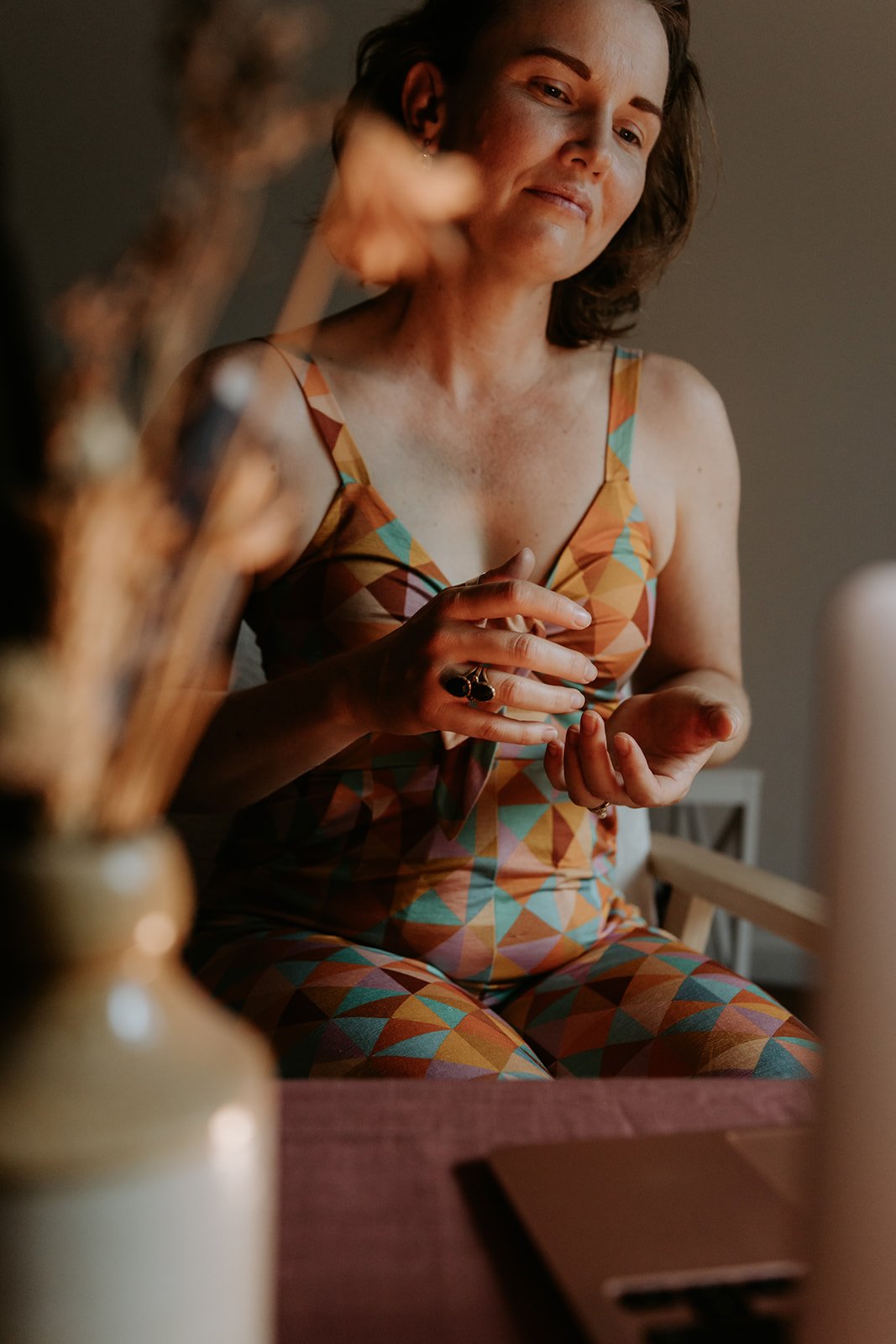
"The grounding, the sitting and feeling into where I'm holding things in my body, knowing whether to move or just sit with it – I don't think I'd be this far along without it."
– Anchor participant
Imagine what it would be like if…
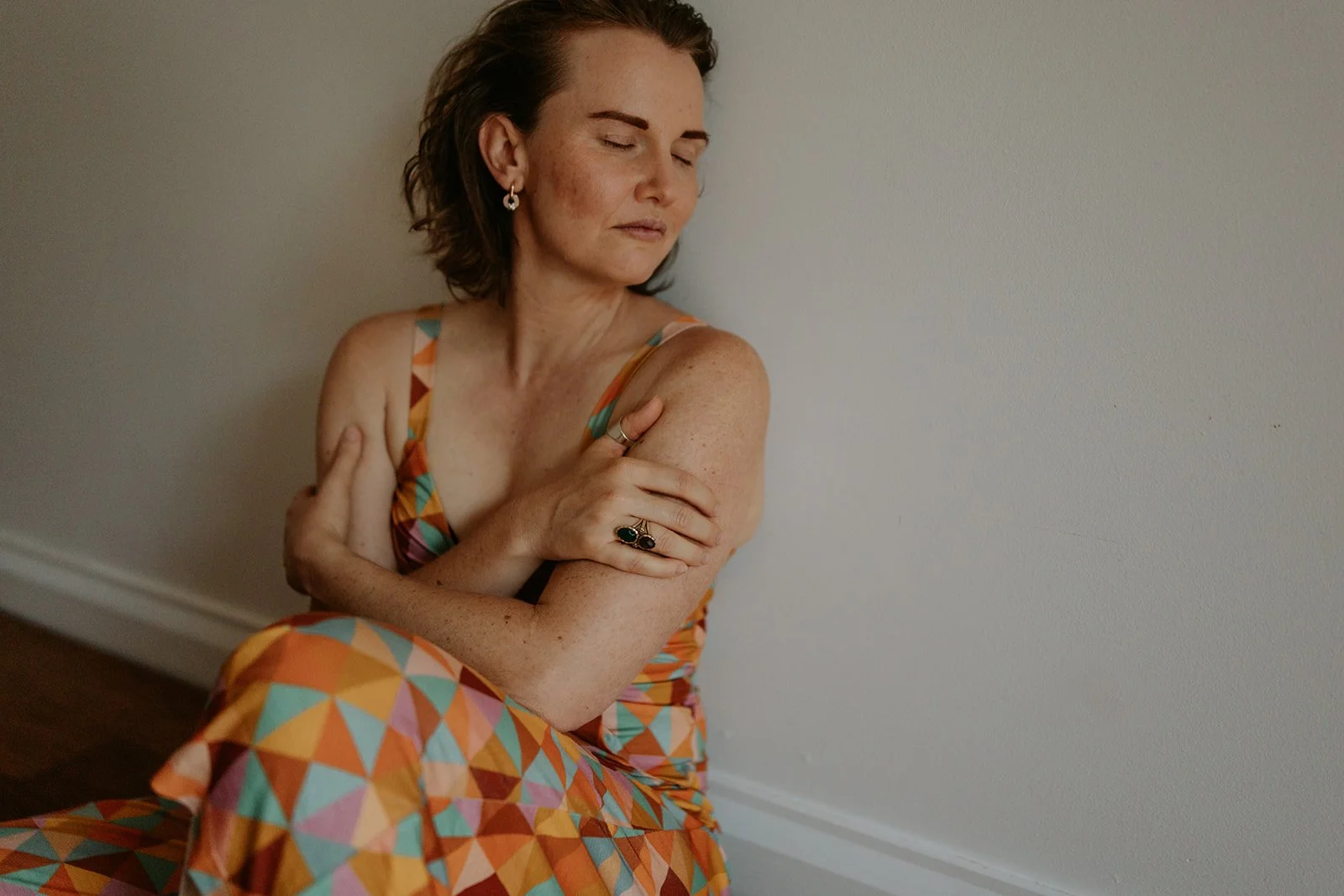
You had one real, felt place to come back to, instead of a list of techniques you're supposed to get right
The hard thing could be here without taking the whole day with it
Your body felt less like something to brace against, and more like somewhere you could rest
Caring for yourself stopped feeling like one more thing you're failing at
You actually trusted the ground would hold beneath you

A 10-DAY SOMATIC EDUCATION PRACTICE TO HELP SOFTEN PAIN AND OVERWHELM
Today and get…
THE FULL ANCHOR COURSE (A $149 VALUE)
You'll receive:
10 days of short guided audio practices, led by Claire
Daily reflection prompts, light enough that they don't feel like homework
A pre and post self-assessment, so you can feel what's actually shifted
Your own personal anchor map – a record of what steadies your body
A closing integration day to let it all land
Yours to keep, to come back to whenever you need
Today: $37 (normally $149)
START ANCHOR
upfront
$37
One payment
(Normally $99)
Still have questions?
CHECK OUT THE FAQs
Here are some common questions people have asked before joining Anchor. If your question isn’t answered here, please reach out to claire@careweaver.com.au and we’ll get back to you as soon as possible.
-
Because Anchor doesn't start with the tools. It starts with the ground underneath them. Most approaches hand you skills and science before you've got anywhere steady to stand, so they slip the moment things get hard. Here, we build that steady place in your environment first.
-
No, and I won't pretend it will. Anchor helps you meet what's hard with more steadiness, so its intensity can soften. That's a different thing from making it disappear, and in my experience it's the thing that actually helps.
-
No. If you're in need of therapeutic support, please reach out to your therapist or GP first.
-
None at all. Anchor meets you wherever you are.
-
Each day will provide around 10 minutes of content plus supporting resources.
I recommend you put aside at least 20 minutes aside each day for hands on interaction with the content and resources.
Beyond these 20 minutes, you will weave practices in through your day to day. These practices should take no extra time outside of your day.
-
Anchor is completely self-paced. Some people prefer to engage in the content every day. Others every second or third day.
There's no falling behind. You move at your own pace and come back whenever you need.
-
If you feel your CareWeaver purchase hasn't delivered on a consumer guarantee under the Australian Consumer Law (ACL), please reach out to us at claire@careweaver.com.au to raise a claim.
We'll need your proof of purchase (order number or receipt) along with a short explanation of your concern.
Once we receive your claim, we'll work through it and offer an appropriate remedy in line with our ACL obligations. Please note that claims need to reach us within 7 business days of accessing the program – a window we consider reasonable given the nature of what's being offered.